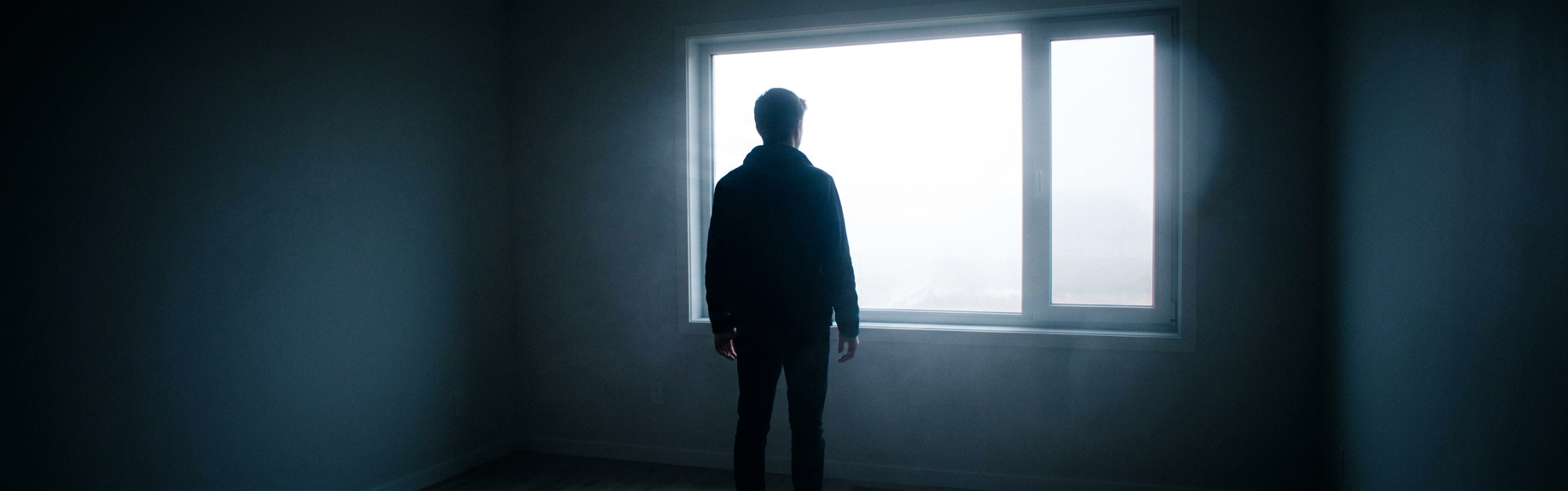
You know the person you want to be. You've thought about it — not necessarily with words, but with the particular clarity that comes at 11pm when you're alone with your thoughts and nobody needs anything from you. You have a sense of him. The way he carries himself. The things he doesn't compromise on. The kind of friend he is, the kind of son, the kind of man you'd respect if you met him walking down the street.
And then there's the version of you that woke up this morning. Who hit the alarm. Who said something he didn't mean. Who chose the easier thing when the harder thing was sitting right there, available. Who is, by almost any honest measure, not quite the person he intends to be.
That gap — the distance between who you are right now and who you know you're capable of becoming — is not evidence of failure. It is the most honest place you can possibly start from. And it is what this magazine exists to help you cross.
Information is not formation. Knowing is not becoming.
The Central Distinction
Knowing what kind of man you want to be and actually becoming him are two completely different problems. They require different things. They unfold on different timescales. Confusing them is one of the most common and quietly devastating mistakes a person can make.
Here is something nobody tells young men clearly enough: knowing what kind of man you want to be and actually becoming him are two completely different problems. They require different things. They unfold on different timescales. And confusing them — thinking that understanding something is the same as being changed by it — is one of the most common and quietly devastating mistakes a person can make.
You can read every book ever written about courage and still flinch when it counts. You can understand intellectually that honesty matters and still tell the convenient half-truth in a tight situation. You can know that real strength involves admitting when you're wrong, and still feel your jaw tighten and your defences rise every single time someone challenges you. Information is not formation. Knowing is not becoming.
This distinction is not a new idea. The philosopher Aristotle wrote about it two and a half thousand years ago, arguing that character is not something you have — it is something you do, repeatedly, until the doing becomes who you are. You don't become honest by believing honesty is important. You become honest by being honest in the small moments when no one is watching, over and over, until honesty is simply what you do. The belief is where you start. The repetition is where you actually get built.
Most of what we consume — the content, the videos, the motivational noise — operates at the level of belief. It tells you things. It gives you frameworks and five-step systems and compelling arguments for why you should be a certain way. And some of that is genuinely useful. But none of it does the work for you. None of it reaches across the gap.
The gap is the interesting part, if you're willing to look at it honestly.
It shows up in the difference between who you are in public and who you are at home. Between the promises you make to other people and the promises you make to yourself — and which ones you actually keep. Between the version of you that knows exactly what the right thing to do is, and the version of you that decides not to do it because tonight isn't a good night, or because nobody will know, or because you'll start properly on Monday.
Most people treat the gap as something to be ashamed of. Something to hide, minimize, explain away. But the gap is not shameful — it is developmental. It is what growth actually looks like from the inside. Every man worth admiring has had one. The difference between the men who eventually close it and the men who don't has very little to do with talent or intelligence or circumstances. It has almost everything to do with whether they were willing to look at the gap honestly and decide that the crossing was worth attempting.
The crossing is worth attempting.

So what does that actually mean? What does starting look like when you don't have a clear plan or a particular skill or a mentor who has handed you the map?
It starts, more often than not, with paying attention.
Not to the person you want to be — not yet. To the person you actually are. To the moments when you chose the easy thing. To the commitments you walked away from when no one was looking. To the feelings you dismissed because dealing with them seemed like too much work. To the habits and patterns and small evasions that are, right now, quietly building a version of you that you haven't consciously chosen.
This sounds uncomfortable. It is. Looking honestly at the gap between your values and your behaviour — without collapsing into self-criticism and without making excuses — is genuinely hard. But it is the only starting point that actually works. You cannot change the version of you that you haven't been willing to see clearly.
You cannot change the version of you that you haven't been willing to see clearly.
What this magazine is, at its core, is an invitation to look clearly. At yourself. At the things that shape you — your relationships, your body, your habits, your money, your presence in a room. At the ideas and questions that deserve your attention. At the kind of man you're actually building, one ordinary day at a time.
We are not going to tell you what kind of man to be. That is not our job and, frankly, it would be bad manners. But we are going to give you the best tools we've found for thinking about it — the research, the real stories, the honest arguments, the practical things you can do this week. And we're going to talk to you the way we'd want to be talked to: as someone who is capable of figuring this out, if given the right material and the space to think.
The gap between who you are and who you want to be is not going to close by the end of this magazine. It is not going to close by the end of this year. This is the work of a life, not a weekend. But every man who has ever crossed significant distance between the two started somewhere. He paid attention to the right things. He made the better choice in one small moment when it would have been easy not to. He did it again the next day.
That's the art of becoming. It doesn't look dramatic from the outside. From the inside, it feels like paying attention, making choices, and doing the work again tomorrow.
You already know the person you want to be. The rest is just showing up.